
Rapid Prototyping
Across the United States, DCS facilities drive rapid prototyping and innovation, supporting engineering, light manufacturing, software development, system integration, and experimentation for the Department of Homeland Security (DHS), the U.S. Nuclear Regulatory Commission, and the U.S. Army. Our facilities are equipped to handle a wide range of tasks, including precision sheet metal production, weldment configurations, stock preparation and secondary operations, quality control inspections, vibration testing, and more. Examples of our capabilities include Engineering and IVN Development, Autonomy, and Biohazard Shelters.
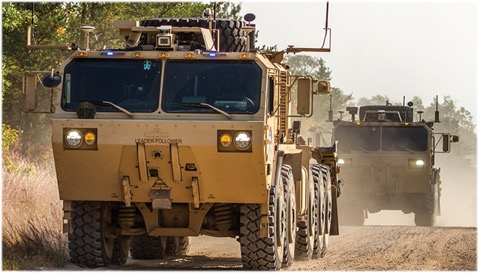 DCS has been an integral part of the Automated Ground Resupply (AGR) and Expedient Leader Follower (ExLF) Science & Technology programs to develop, integrate, test, and evaluate unmanned autonomy capability. The concept uses autonomy to produce self-driving convoys, where only the lead vehicle needs to chart the course for everyone following. The lead vehicle can be driven remotely, dropping waypoints for the follower vehicles (i.e. breadcrumbs). DCS developed the Warfighter-Machine interface, controllers, and integrated the system into a palletized loader fleet of vehicles for testing.
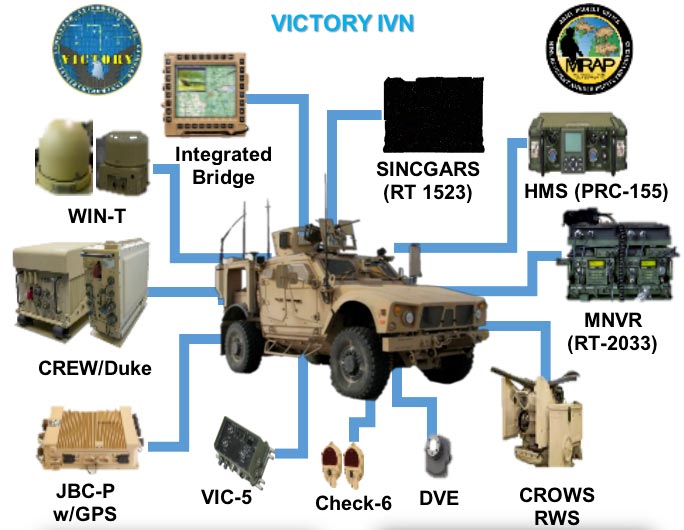 DCS develops Modular Open System Architecture (MOSA) approaches to intra-vehicle network solutions, to include the use of the Ground Combat System (GCS) Common Infrastructure Architecture (GCIA) and Vehicle Integration for C4ISR/electronic warfare Interoperability (VICTORY) standards to quickly integrate and test vendor prototypes. DCS matures and maintains System Integration Labs (SILs) used to evaluate system performance and functional compliance to these standards, along with conducting engineering and operational evaluations and collecting and analyzing performance data, human interface data, and network performance data.
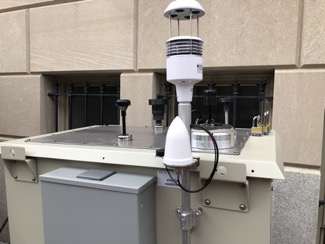
In response to anthrax letter mailings, the DHS initiated a program to place bio-detection equipment nationwide. In the years since those devices were deployed, technology has improved and detectors/triggers are more advanced. DCS was tasked to develop “shelters” to house various triggers so their performance could be measured against each other at the same location, under the same environmental conditions (temperature, humidity, pressure, et) so DHS could compare performance of various detectors. DCS developed and delivered the first shelter in only 83 days. This included all the design (electrical, mechanical, systems), integration, and installation of equipment necessary to monitor detector performance remotely.
Contact Us
6909 Metro Park Drive, Suite 500
Alexandria VA 22310
P: 571-227-6000
info@dcscorp.com

Join Our Team
DCS has amazing, talented, and
technology-savvy people. We're growing
continuously and sustainably.
Check out our DCS Careers
© 2025 DCS Corporation, All Rights Reserved
Site Map